Posts

Showing posts with the label Cambodian Vegetables

ស្លឹកងុប or Star Gooseberry (Sauropus Androgynus)
Image
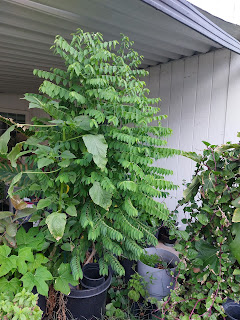
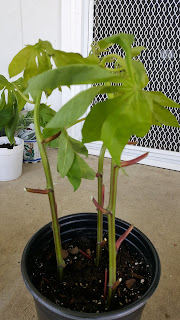
(Sauropus Androgynus) or ស្លឹកងុប can be propagated by cutting or seeds. A lso known as Sweet Leaf,  Katuk, and Star Gooseberry. It is an essential accent  ingredient in some traditional Khmer cooking. Used in Soups, stir fry,  or a quick blanched used for side dish in dipping sauce/pastes (Khmer Pesto).  A native to Cambodia.  It is a South East Asian indigenous food source.  A perennial in a tropical, but tender subtropical climate.  It's sensitive to frost. Need protection from frost, and afternoons sun here at USDA zone 9b.  It's an erected shrubs. It's a flaccid and have cylindrical branches. It bears male and flowers.   Aeration and pruning regularly to encourage new roots and shoots.  Sauropus Androgynus is rich in vitamin A & E, providing more than 100% of the daily value per 100 g serving. It's also a source of minerals.  6-10-19 3 weeks germination
ដំឡូងមី or Cassava (Manihot Esculenta)

Image
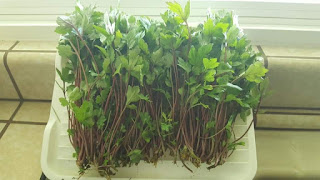
A Budget-friendly gardening. I bought a bundle of cassava leave for cooking and save the stalks for propagation.  It's mostly young shoots and stems.  Normally,  you'd propagate cutting of mature woody cutting. But we'll see if it take roots. Wish me luck. The Khmers harvest all parts of cassava. Stalks cut to size and replant. Chewy mature leaves is cooked and feed the pigs. Tender leaves is used in a selective of khmer soup, or  blanched and used as wraps in dipping sauce "Khmer Pesto".  The Khmers commonly use cassava tubers in its unprocessed form. Tubers is   peeled  and steamed,  or baked  whole directly in hot ash/Amber, eaten as snacks. Used in dessert dishes, dice or shred. A native to Cambodia.  A perennial in tropical climate .  Propagation is done with cutting of woody or mature stalks. It's an easy to grow with very little effort.  It's drought tolerant. It was one of our stables food source durin...

(50°F) ដើមស្នោ, ផ្កាស្នោរ (Sesbania Bispinosa)

Image
Sesbania bispinosa or ដើមស្នោ, ផ្កាស្នោរ. Khmers harvest tender leaves,  shoots and flowers for traditional Khmer cooking.  It is used in stir fry,   Soups,  a quick blanched or  fresh used as wraps in dipping.  Tender shoots and flowers is commonly used in pickling/brined.   Flowers  is commonly serve as fresh toppings in a Khmer noodle soup.    A native to Cambodia.   An annual in a tropical and subtropical climate, minimum temperature (50 °F). It reseed itself. An erected lengthy soft wood shrubs, with sparse open loose branches.  It's bears clusters of yellow flowers.  Commonly found in rice paddy field and along fresh waterways. Although it thrive in wetlands but it can be drought tolerant, and easily adapted to other soil conditions. 5-19-19 8-23-19 8-24-19 https://pfaf.org/USER/Plant.aspx?LatinName=Sesbania+bispinosa M

ម្រុម/Moringa (Oleifera) 25 °F

Image
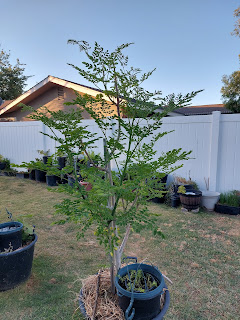
Seedling of Moringa or ម្រុម at 3 weeks. Khmers harvest tender leaves,  shoots and flowers for traditional Khmer cooking.  It is used in stir fry,   Soups, and  a quick blanched used as wraps in dipping. Nutrient facts: https://ndb.nal.usda.gov/ndb/foods/show/2974 A native to Cambodia.   A perennial in a tropical and subtropical climate. Though the online experts said minimum temperatures (40 °F) but in USDA zone 9a I grow them soutdoors year-round with only overhead protection. It is frost sensitive.  Soft wood, bears white flowers. Tender leaves, shoots and flowers is much needed for traditional Khmer cooking.  6-26-22 6-30-19

(50 °F) អង្គាដី ផ្កាក្រហម, Sesbania grandiflora

Image
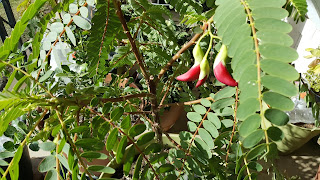
Sesbania grandiflora or អង្គាដី ផ្កាក្រហម, seedling at 3 weeks. Khmers harvest tender leaves,  shoots and flowers for traditional Khmer cooking.  It is used in stir fry,   Soups,  a quick blanched used as wraps in dipping, and shoots and flowers is pickling in brined   A native to Cambodia.   A perennial in a tropical and subtropical climate. It lacks tolerance for cold temperature below ( 50 °F).  It is frost sensitive.  An erected small soft wood tree. Growing rapidly.  Bears variety of red,  white, and pink flowers.  Commonly found in villages/ residential areas. It may have been domesticated but not commercialized among the Khmer older generation.  8-23-19 I can control over heights where i want my tree to branch out. Strip it all to encourage branches growth and .  6-10-19

Jing Ju Chai (Artemisia Lactiflora)

Image
(Artemisia Lactiflora) 'Guizhou' also known as Jing Ju Chai, White Mugwort. In the U.S., this medicinal herb can only be found at some specialty Asian markets, or backyard garden of the medicinal enthusiasts. This medicinal herb can be used dried or fresh. In Soups and Stew, or in drinks. As tea or smoothie. It is assembled among other herb regimen made excellent for chicken soup. It good for general health, but when an occasion calls for, this is a soup to aid moms with new births on a 30 days postpartum diet. It is used in conjunction with other herbs, a regimen that is most treasured among Asian medicinal enthusiasts White Mugwort is with vivid-green to deep-purple leaves is the defining feature that sets it apart from other Mugwort.  In late Summer and into winters it sends up wands of creamy-white flowers atop the maroon stalks, a graceful and nodding sights.  For contanter planting, a well-draining soil is an absolute must for this plant.  With suitable condition ...

ផ្ទីដូង, Amaranth/Amaranthus or ផ្ទីអាចម៍មាន់, ផ្ទីដូង

Image
My budget-friendly and a short cut to backyard gardening. Some store-bought Amaranth or ផ្ទីអាចម៍មាន់, ផ្ទីដូង cutting. Will see how well and how many will take roots

ត្រកួន / Water spinach (Ipomoea Aquatica) 50°F

Image
ត្រកួន (Ipomoea Aquatica). Also know as Water Spinach,  Ching/Pak Quat, Rau Muong. Propagating some store-bought vegetable cutting. In Khmer cooking,  it is one of the most versatile veggies.  It serves us well. From Stew to Veggie platter,  and everything in between.  In my experience,  there are two different types. A Brownish-red stems is a wild variety that has a creeping habits, is found and growing wild in fresh waterways and in rice paddy field in a similar manner as Limnophila aromatica .  This variety will not do well on land... as it likes flooded habitats.  This could be the reason why it is not commercially cultivated.   In the West,  the green stem variety is commonly found and sold,  as it can be easily cultivated on land with regular watering schedule. It has an erected growth habit.  The two tastes different. The Wild-brownish-red stems has more like concentrated taste whereas the Cultivated-Green stems ha...

ចំភ្លូ, ចាព្លូ, Lá lốt (Piper Sarmetosum)

Image
Piper Sarmetosum or ចំភ្លូ, ចាព្លូ, Lá lốt. Also known as Piper Lalot. It said to have medicinal values.  It's a native to and commonly found in the tropical climate of Cambodia under the canopy of the forest. It's a shade loving plant. It doesn't do well in direct sunlight, even the 11:00am sunlight can do lots of damages. This plant is uncommon,  under-appreciated, neglected and overlooked by many in the West. In the older generation of Cambodia it has never been domesticated because it was never been valued as a "Money making" vegetation do to the fact that it can be easily found growing wild. I grew up eating it in different forms and in a variety of dishes in my great-grandparents' kitchen. It's an excellent accent ingredient in a traditional Khmer cooking made with eel called "Kore Gruerng K'dow", a Spicy lemongrass paste stir fry. A quick glance at its leaves can be easily mistaken for Piper Betle by many in the West. But there's a...